Brooklyn, the world stage and a life of contradictions. An illustrated, in-depth history of the people, places and games behind the eleventh World Champion.
24 chapters · 40 images and documents · about 26 minutes to read
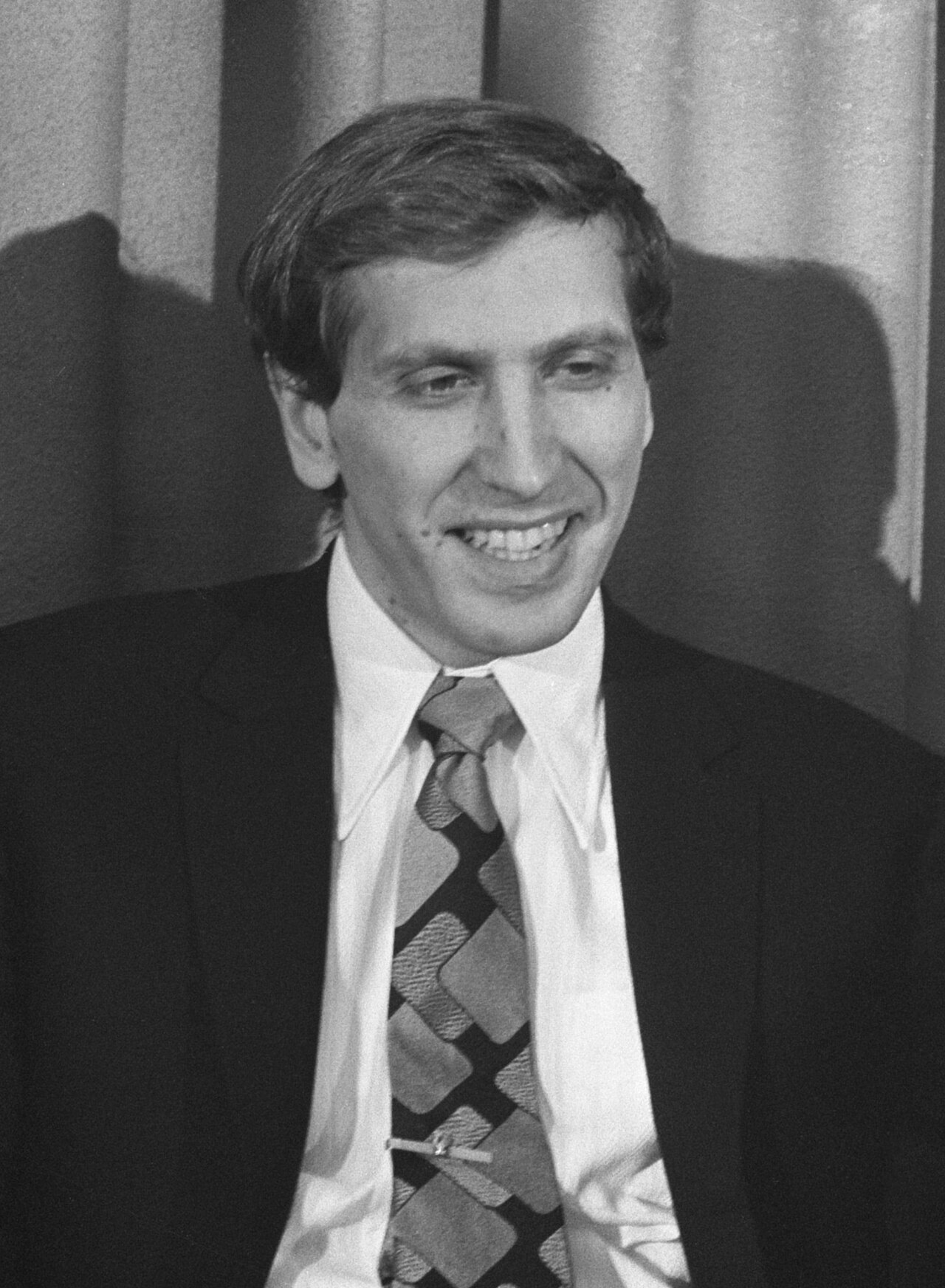
Bobby Fischer in Amsterdam on 31 January 1972, before the world championship match.Bert Verhoeff for Anefo · CC0 · proportionally resized for the web · Image source
A life, chapter by chapter.
Read from the beginning or jump directly to an era. Numbers in the text link to the supporting sources; each photograph opens in a separate enlarged view.
Robert James Fischer was born in Chicago on March 9, 1943. His first chess opponents were not grandmasters: at six, he discovered the game with his older sister Joan and an inexpensive chess set. These ordinary beginnings belong to his story just as much as the tournament halls that followed. He was still a child discovering rules, moving pieces and finding new problems within the board’s 64 squares. [1]
His mother Regina carried responsibility for everyday family life. She worked as a teacher and registered nurse; the family spent time in California and Arizona before making New York its home. Joan was more than a minor character: while Regina worked, she brought games home for her younger brother. Fischer’s childhood cannot therefore be told only as the story of an isolated genius. It was also a family history of work, moves and an older sister’s support. [2]
Regina actively sought chess contacts for Bobby. In 1950 she approached Hermann Helms, the Brooklyn Daily Eagle’s chess columnist, because her son needed opponents. Historian John Donaldson emphasizes this connection to New York’s chess community: a fascination pursued at home became contact with other players. [3]
Carmine Nigro became his first important chess teacher and worked with him until 1956. Nigro’s value did not depend on being an elite grandmaster himself. In Frank Brady’s account, he remained a teacher whom Fischer explicitly appreciated later in life. Nigro’s move to Florida ended this early phase of instruction. The ascent had begun with guidance and personal attention, not with a fully formed world champion who needed nobody. [4]
Jack Collins’s Hawthorne Chess Club then became important: a chess gathering in Collins’s apartment, with games, analysis and an extensive library. Donaldson stresses their intensive work together in 1956–1958. Having this meeting place nearby enabled regular learning; Fischer’s independent study developed within a stimulating community. [3]
By 1956 Fischer’s chess world was already extending beyond the United States. He travelled to Cuba with the Log Cabin Chess Club and played at Havana’s Capablanca Chess Club. A surviving photograph shows the young visitor at the board with Juan González and several Cuban chess enthusiasts. It offers a valuable counterpoint to the later image of the solitary challenger: chess also meant travel, hosts and encounters between club communities. [6]
In July the thirteen-year-old became U.S. Junior Champion. The contemporary Chess Life report emphasized both the age record and the fact that this was only his second attempt. The previous year he had finished twentieth with five points from ten games. That comparison makes his progress tangible: just one year separated a respectable junior result from a national title. This achievement was not invented retrospectively because of the famous Byrne game; it was publicly documented beforehand. [5]
On October 17 he defeated Donald Byrne with Black at the third Rosenwald tournament in New York. With 17…Be6, Fischer left his queen under attack. When Byrne took it, a sequence of checks followed: Black’s pieces worked together while White had no time to reorganize. The game ended in checkmate on move 41. Replaying it reveals more than a spectacular sacrifice; it shows development, initiative and concrete calculation reinforcing one another. [7]
The brilliance of that game should not obscure the rest of the tournament. Fischer scored only 4½ points from eleven games overall; Samuel Reshevsky won the event. Attention to Fischer’s victory then grew gradually in the chess press. A brilliancy prize and extended coverage turned one encounter into an event of its own. The later label “Game of the Century” must therefore not be confused with winning the tournament itself. [8]
Byrne deserves more than the role of a famous defeated opponent. He had won the 1953 U.S. Open and later taught English and coached chess at Pennsylvania State University. His student Dan Heisman remembers a strong player and influential teacher. Contemporary university reporting also records Byrne organizing tournaments. The 1956 game thus connects two life stories: a future world champion and a master who passed his knowledge on to students. [9][10]
The 1957–1958 U.S. Championship marked the decisive step from remarkable talent to national leader. Fischer went unbeaten through thirteen games: eight wins, five draws and 10½ points. Reshevsky finished one point behind. The winner was only fourteen. Beyond his age, the nature of the result matters: this was not an upset in a single encounter, but an entire championship completed without defeat against a field of established players. [11]
A young champion’s life nevertheless involved more than tournament moves. In April 1958 Chess Life reported on interviews, work on a book, school assignments and Fischer’s appearance on I’ve Got a Secret. Two complimentary airline tickets enabled him and his sister Joan to travel to Europe; the report identifies Sabena as the airline. Joan accompanied him as his older sister and a registered nurse. Sporting qualification also depended on practical matters such as travel funding and an accompanying adult. [12]
At the Interzonal in Portorož, then in Yugoslavia, Fischer had to establish himself against international opposition. Twenty games brought six wins, twelve draws and two defeats: with twelve points he shared fifth and sixth with Friðrik Ólafsson. Both were among the six qualifiers for the Candidates. Mikhail Tal won the Interzonal. Fischer’s achievement was therefore not tournament domination, but a hard-earned place in the innermost circle of world-title contenders. [13]
In 1958 Fischer also became the youngest grandmaster up to that time. His achievements attracted attention beyond chess clubs, but he belonged to a wider American chess scene that included young players such as William Lombardy and Larry Evans. The World Chess Hall of Fame also documents substantial U.S. federation membership growth between 1957 and 1960. The later boom of 1972 had a prehistory: new talent, organizational work and a public increasingly encountering chess as news. [14]
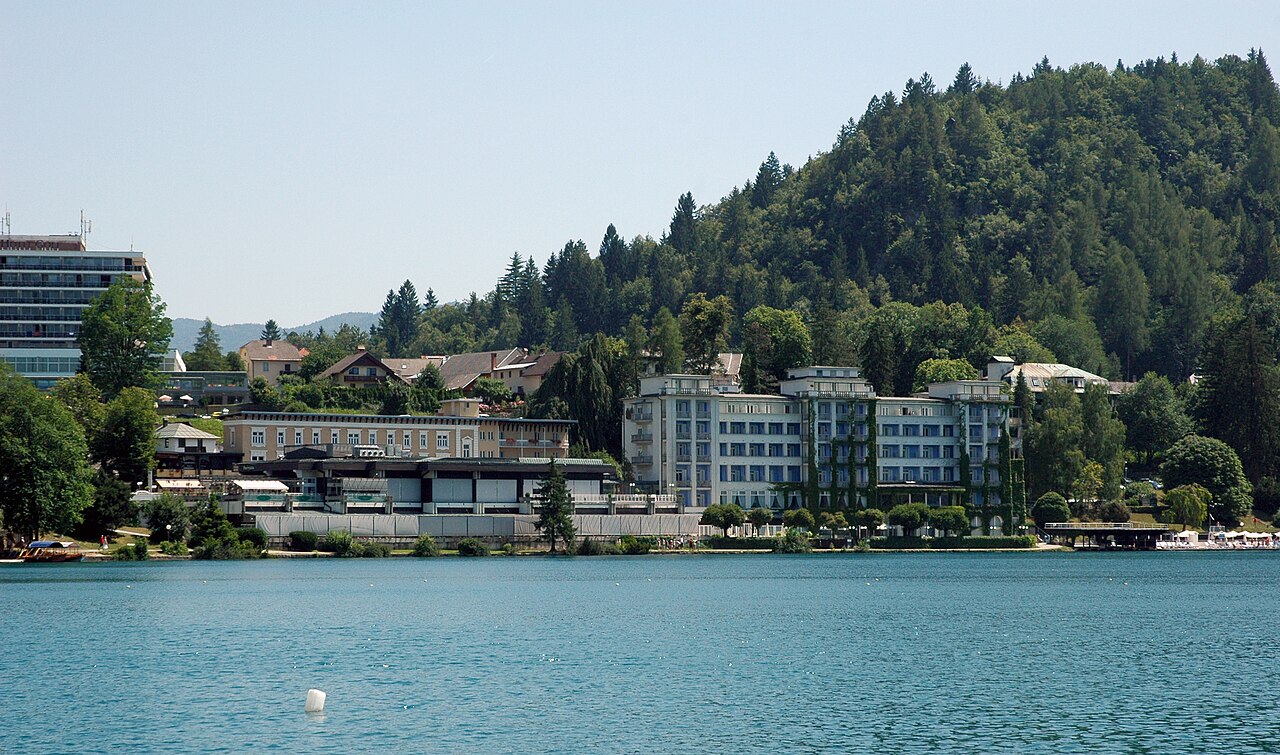
The 1959 Candidates was a prolonged examination, not a short knockout series. Eight players faced one another four times, producing 28 games per participant. The competition began in Bled, continued in Zagreb and finished in Belgrade. For sixteen-year-old Fischer, that meant repeatedly facing the same experienced opponents over many weeks. To challenge world champion Mikhail Botvinnik, a player needed more than isolated brilliant games: he had to sustain his performance throughout the event. [15]
Fischer opened with a victory over Paul Keres, but the final standings showed the distance still separating him from the top. He shared fifth and sixth with Svetozar Gligorić on 12½ points. He lost all four encounters with tournament winner Tal, yet won two against Keres. Those contrasting results are more revealing than a picture of unstoppable ascent. Fischer could already defeat the best, but could not yet master every opponent and tournament format equally well. [16]
At the 1960 Chess Olympiad in Leipzig, Fischer played first board for the United States. His record was ten wins, six draws and two losses: 13 points from 18 games. The team took silver behind the Soviet Union. His ability now served a different purpose: every half-point counted for a team as well as for himself. The familiar Leipzig photographs with Tal therefore show an encounter within a team competition, not a world championship match. [17][18]
Bled 1961 produced a particularly revealing result. Fischer remained unbeaten through nineteen games and finished second to Tal with 13½ points. This time he won their individual encounter; he also defeated Petrosian and Geller. Yet Tal accumulated one point more overall. The comparison with 1959 shows a young player who had become substantially stronger, without every reversal of an earlier rivalry immediately translating into victory in the tournament as a whole. [19]
At the 1962 Stockholm Interzonal, Fischer delivered a new statement of strength. He won with 17½ points from 22 games, remained unbeaten and finished two and a half points ahead of his nearest pursuers. Thirteen wins and nine draws turned the former narrow qualifier into a clear tournament winner. Against opponents such as Petrosian, Geller and Korchnoi he had now done more than hold his own: he finished well ahead of them in the standings. [20]
The subsequent Candidates in Curaçao did not carry him through to a title match. Fischer finished fourth with 14 points from 27 games played. Petrosian won unbeaten with 17½, narrowly ahead of Keres and Geller on 17 each. Illness forced Tal to withdraw after the third cycle. His missing encounters explain why the other participants’ records show 27 games played rather than the originally scheduled 28. [21]
The sporting result was accompanied by a controversy still discussed today. Petrosian, Keres and Geller drew all twelve games among themselves; the FIDE museum’s account gives an average length of only 19 moves. That is a verifiable pattern. It is not equivalent to proof that every Soviet participant jointly controlled every result. Here especially, the games’ documented record needs to be distinguished from broader claims about agreements behind the scenes. [22]
Fischer made his accusations public in Sports Illustrated in August 1962. The chess press responded that same year: Jack Straley Battell’s “Fischer Speaks Out” discussed both the allegations and criticism of the championship system. A tournament disappointment had become a public debate about fairness and incentives. Fischer’s article is an important source for his position at the time, but it is not a neutral investigative report on everything that happened in Curaçao. [23]
Retrospective anecdotes alone cannot settle the question. A later statistical study by Charles Moul and John Nye found patterns across several post-war tournaments consistent with Soviet draw collusion. That is an analytical contribution to the debate, not a reconstruction of every conversation behind the scenes. A history that takes Fischer seriously must also distinguish his accusation, the documented course of the tournament and later explanatory models. [24]
The US Championship spanning 1963 and 1964 captures Fischer's dominance in its starkest form: eleven opponents, eleven victories, not a single draw. Larry Evans finished second with 7½ points, a full 3½ behind him. The field also included Samuel Reshevsky, Pal Benko and both Byrne brothers. A perfect score in chess means more than going undefeated: with Black as well as White, against different styles, and even after establishing a commanding lead, every individual game still had to be won. [25]
His victory with Black against Robert Byrne became especially celebrated. Fischer transformed an apparently orderly position into an attack in which his knights penetrated White's camp in succession. Byrne resigned after 21…Qd7; the threatened continuation never had to appear on the board. This is not the 1956 encounter with Robert's brother Donald. Comparing the two is particularly revealing: different games against two brothers show how Fischer could turn active pieces into concrete tactical threats. [26]
In 1964, audiences encountered him through more than master games. An extensive tour took Fischer across the United States and Canada for lectures and simultaneous exhibitions. John Donaldson's reconstruction from reports, recollections and game scores includes Detroit, Montreal, New Orleans, San Francisco and Denver. In a simultaneous display, Fischer moved from board to board while many opponents played against him at once. This was another side of chess culture: club players could face their national champion personally and become part of his story through a game of their own. [27]
At the 1965 Capablanca Memorial, Fischer was not sitting in the same room as his opponents. The US State Department had refused the necessary permission for him to travel to Cuba. A long-distance arrangement followed: Fischer played at New York's Marshall Chess Club, with his moves transmitted to Havana. A contemporary Associated Press report describes his lawyer Andrew P. Davis negotiating the alternative with the organizers. The political boundary prevented the journey, but not participation in the international competition. [28]
Chess Life reported from a packed Marshall Club, where spectators followed the moves on a demonstration board. The teletype connected two rooms, two audiences and one shared game. Fischer's early results included a victory over former world champion Vasily Smyslov. This episode belongs to the 1965 Capablanca Memorial, not the 1966 Chess Olympiad. It reveals how much organization long-distance chess then required: arbiters, transmission and local boards had to work together, long before sharing an online board became routine. [29]
The second Piatigorsky Cup brought leading international players to Santa Monica's Miramar Hotel in 1966. Behind it stood Jacqueline Piatigorsky and her husband, the cellist Gregor Piatigorsky. Jacqueline was a strong tournament player herself, not simply a name attached to a trophy. Surviving photographs and documents record her work on playing conditions, events and encounters between the participants. The tournament therefore illuminates a less frequently told part of Fischer's career: patrons and organizers created the settings in which his talent could meet the world's best. [30]
Competitively, this was no uninterrupted procession of victories. In the first half, Fischer lost successive games to Bent Larsen, Miguel Najdorf and Boris Spassky. An exceptional recovery followed: 7½ points from the nine return games brought him to eleven overall. Spassky remained narrowly ahead on 11½. Six years before Reykjavik, the two were already contesting a close race at the top. Looking at both halves tells us more than the final placing alone: here Fischer's strength emerged particularly clearly in his response to setbacks. [31]
At the Interzonal in Sousse, Tunisia, Fischer led after ten games actually played, with seven wins and three draws. Yet his next attempt at the world championship ended away from the board. Religious restrictions on playing days, rescheduled games and further timetable disputes led to departures, attempted returns and forfeits. Eventually Fischer was out, and his results were removed from the final standings. Bent Larsen won the tournament. Sousse thus records both Fischer's strength at the time and the damage unresolved conflicts could inflict on his career. [32]
Responsibility cannot responsibly be reduced to a single anecdote. The FIDE report later published in Chess Life explicitly answered objections from the US federation. FIDE's account pointed to initially accepted schedules and additional demands made later; even the starting of Fischer's clock was discussed as a special measure. These documents record not only rules but differing perspectives among those involved. They explain why a careful history must distinguish the established outcome—Fischer's exclusion—from disputed judgments about the handling of the event. [33]
Surviving manuscripts trace the making of My 60 Memorable Games. A draft dated March 1966 still ended after 52 games; eight more were added later. Published in 1969, the book includes nine draws and three losses alongside its victories. The selection therefore goes beyond an anthology of flawless successes. That is part of its value as a personal chess record: Fischer preserved encounters that mattered to him, including those in which he encountered difficulties or was himself defeated. [34]
Readers seeking to understand Fischer find more than moves here: they encounter explanations of plans, alternatives and tactical decisions. One rewarding approach is to pause at a critical position before reading the note: which possibilities did Fischer see, and why did he reject others? This invites independent thought, rather than treating every historical analysis as infallible. For its reissue, publisher Batsford emphasizes the removal of earlier alterations to Fischer's wording; the author's own voice remains an essential part of the work. [35]
In Belgrade in 1970, Fischer played in the Soviet Union versus Rest of the World team match. Bent Larsen occupied the World team's first board; Fischer faced Tigran Petrosian on board two, scoring two wins and two draws. The Soviet team won narrowly overall. It was also a public spectacle: spectators filled the Trade Union Hall, while others followed the moves outside. For Fischer, it marked a return to an international ensemble in which former and reigning world champions played side by side. [36]
Buenos Aires produced a result whose margin is almost as striking as the score itself: Fischer won with 15 out of 17, undefeated with thirteen victories. Vladimir Tukmakov finished second on 11½. The field also included Miguel Najdorf, Samuel Reshevsky, Vasily Smyslov and the young Henrique Mecking. The crosstable consequently records more than a familiar name in first place; it brings together a generation of international players. Their different backgrounds and styles supply the context against which Fischer's dominance becomes meaningful. [37]
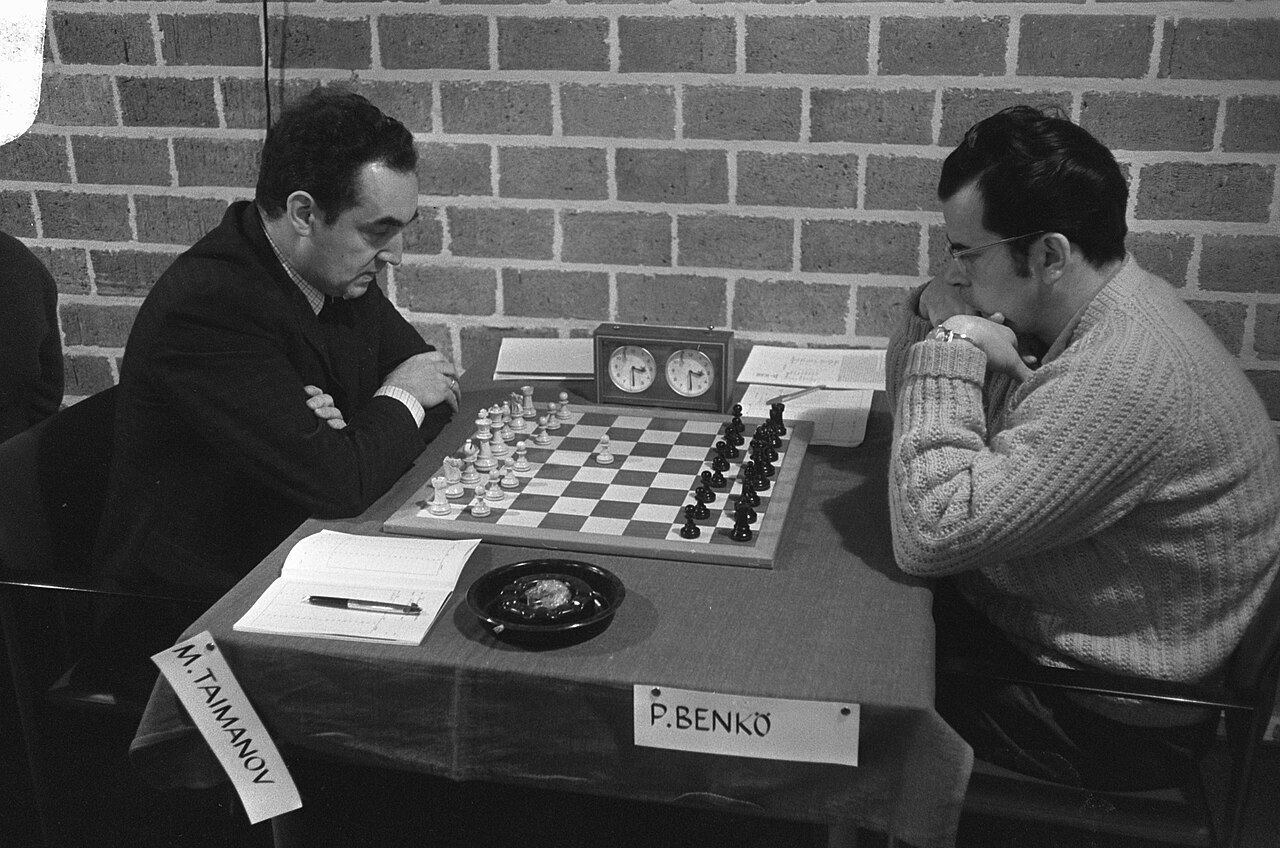
The route to the Palma de Mallorca Interzonal was nevertheless not automatic. Fischer had skipped the 1969 US Championship, which served as the qualifier. Pal Benko relinquished his place, and the alternates did not obstruct the arrangement. Benko later said that his decision had been voluntary and disputed the story that he had sold his place. His personal condition, he recalled, was that Fischer should not withdraw again from the competition or the ensuing matches. At this point, sporting rivalry gave way to tangible support. [38]
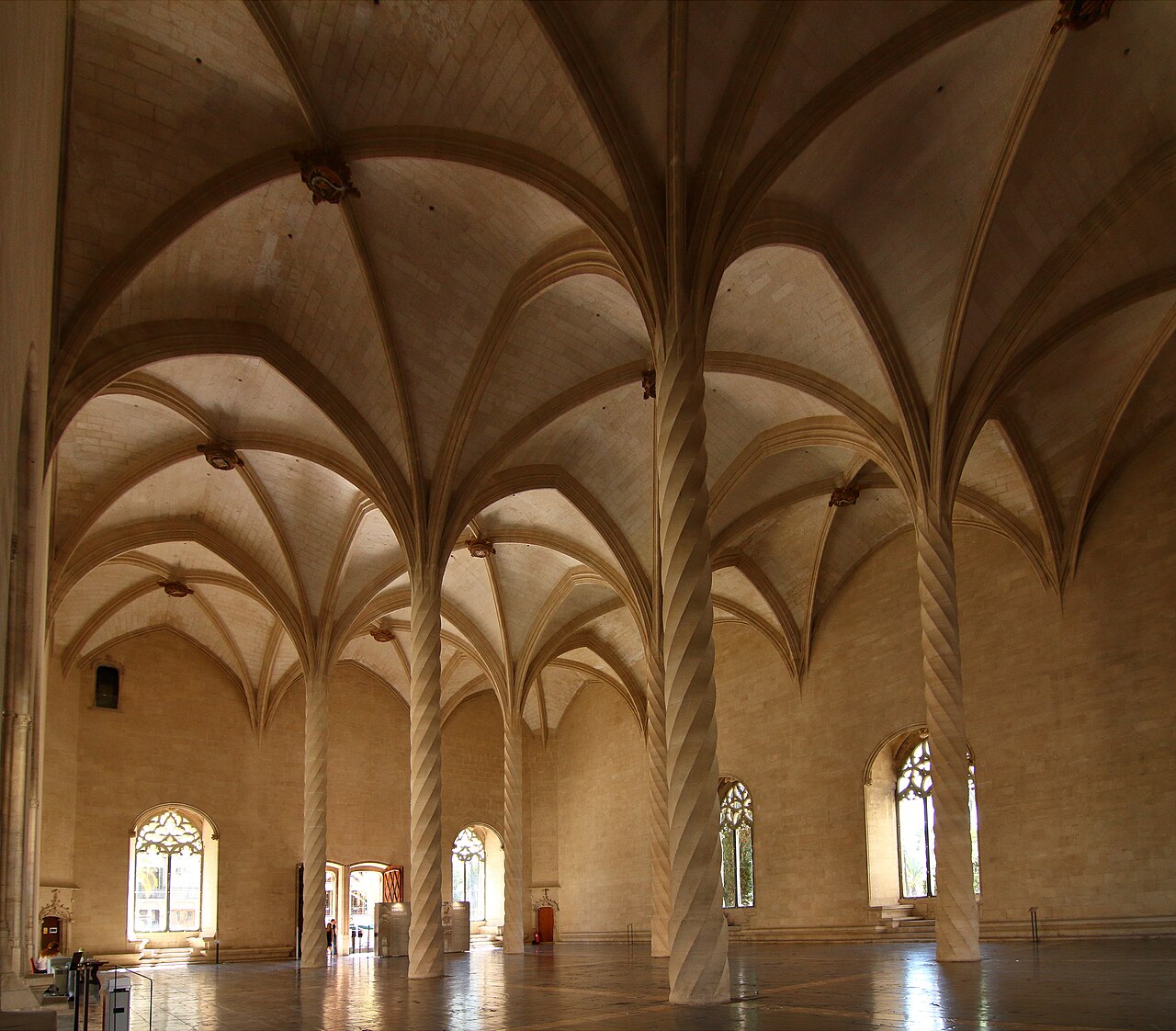
At Palma, Fischer turned that opportunity into 18½ points from 23 rounds, 3½ ahead of Larsen, Geller and Hübner. His final seven results were wins, but one was the forfeit against Óscar Panno. That distinction matters when describing the celebrated twenty-win sequence extending into 1971: it comprises nineteen victories over the board and that one default point. Counting accurately does not diminish the achievement; it separates an exceptional sporting result from the simplified legend that later grew around it. [39][40]
In the Vancouver quarterfinal, Fischer defeated Mark Taimanov 6–0. Behind that compact score stood an opponent with two substantial careers: Taimanov was not only a grandmaster and repeat world championship candidate, but also a professional concert pianist. Presenting him solely as the victim of a famous defeat would do his life a disservice. Precisely because he was an experienced world-class player, the sweep was extraordinary. Six results establish who won; they reveal much less about a person's character or every critical position along the way. [41][42]
July brought another 6–0, this time against Bent Larsen in Denver. The Dane was a major challenger in his own right, reaching the Candidates semifinals in 1965, 1968 and 1971. Two complete six-game sweeps against opponents of this standing made Fischer's campaign especially remarkable. Larsen's portrait should nevertheless extend beyond that single summer. His repeated challenges for the world title give him an independent place in chess history, rather than merely a line in Fischer's list of results. [43][44]
The final against Petrosian in Buenos Aires initially followed a different course. Fischer won the opener, Petrosian answered in game two, and after five encounters the score was 2½–2½. Only then did Fischer win four games in succession to take the match 6½–2½. Those stages deserve to be considered separately. Otherwise, the decisive final margin conceals the fact that the former champion kept the contest level for five games and actually ended Fischer's winning sequence. [45]
Surviving preparation materials reveal the labour behind the supposedly effortless genius. Robert Wade searched books and periodicals to compile opponent dossiers. These must be distinguished from the red Spassky volume in Eduard Wildhagen's Weltgeschichte des Schachs series, containing 355 games. Fischer's copy carries his own marginal notes. The claim that he knew every game by heart is often repeated; the book and its annotations are more directly verifiable. They show a player collecting existing knowledge, testing it and developing it further for particular opponents. [46]
Boris Spassky was much more than a representative of a political system. He had belonged to the international elite since his youth. After losing his 1966 title match to Petrosian, he fought through another qualifying cycle and won their second championship encounter in 1969. FIDE's account of his career also highlights Kramnik's appreciation of his versatility. That background matters: Reykjavik was not simply a talent confronting an anonymous chess power, but a meeting between two players with their own setbacks, successes and abilities developed over many years. [47]
The first game actually played began at Laugardalshöll on 11 July. Fischer lost after the risky bishop move 29…Bxh2. Amid the dispute over cameras, he did not appear for game two, which was awarded to Spassky by default. The challenger therefore trailed 0–2 although only one game had been played. That distinction belongs in any careful account of the match. Arguments over broadcasting and playing conditions were not decorative background: they affected the schedule and, directly, the score itself. [48]
Game three took place in a side room rather than on the main stage. Spassky agreed to the change, and Fischer achieved his first victory against him. The change of setting matters: it shows how close the match had come to collapse, and how concretely its continuation had to be negotiated. The contest subsequently returned to the main hall. Looking at historical pictures of that large auditorium, it is worth remembering that one of the decisive turning points happened somewhere else. [49]
Game six began on 23 July with 1.c4, rather than Fischer's usual king-pawn move, and transposed into a Queen's Gambit Declined. In his contemporary annotations, Mikhail Tal examined how Fischer gradually deprived Black's pieces of counterplay before attacking on the kingside. This offers a useful introduction to Fischer beyond spectacular sacrifices: the effect comes from the interaction of pawn structure, pieces and time. The concluding attack becomes more understandable when the quieter preparatory moves receive attention as well. [50]
Spassky's victory in game eleven belongs in the story too. In the sharp Poisoned Pawn variation of the Sicilian Defence, he put Fischer under pressure and won. Lev Polugaevsky's contemporary notes described another encounter with an opening question the players had already explored in game seven. The match was therefore also a continuing technical conversation: ideas were tested, modified and tested again. A history displaying only Fischer's victories would leave out both this mutual influence and the reigning champion's resistance. [51]
Fischer also won game thirteen, after which seven draws followed. Victory in game twenty-one brought the final score to 12½–8½. The record contains seven Fischer wins, eleven draws and three wins credited to Spassky, including the default in game two. Twenty games were therefore played within a match numbered to twenty-one. These unadorned figures anchor the dramatic story: Fischer had not only built the necessary advantage, but maintained it until the decisive result. [52]
The federation's historical membership figures show how sharply organized American chess expanded at this time: 30,844 members in 1972, followed by 59,250 a year later. This near doubling makes the boom tangible without attributing every new player to Fischer alone. The longer statistical series also limits an uncomplicated success story. Membership remained high at 59,779 in 1974, before falling to 51,842 in 1975. A world champion could draw attention to the game; lasting participation in organized chess was not automatically guaranteed. [53]
Fischer's fame extended well beyond Europe and North America. In 1973, he opened the first Philippines International Chess Tournament in Manila, making ceremonial moves with President Ferdinand Marcos. Chess official Casto Abundo later described the visit in a personal recollection published by FIDE. Fischer was a celebrated guest, not a participant in a new championship match. Such appearances distinguish public presence from competitive activity: a champion could remain internationally visible while the chess world waited in vain for his next serious tournament game. [54]
Anatoly Karpov earned his right to challenge over the board. In the 1974 Candidates final, he defeated Viktor Korchnoi with three wins, two losses and nineteen draws. The contemporary Chess Life & Review report explicitly identified him as the official challenger. His subsequent accession without a title match should not obscure that qualification. The unresolved question was no longer who should face Fischer, but whether the two would actually play under a set of rules both accepted. [55]
The dispute ultimately centred on Fischer's demand to retain the title if both players reached nine wins. In 1975, the extraordinary FIDE congress accepted an unlimited match but rejected the 9–9 clause by 35 votes to 32. The contemporary federation report explained the practical consequence: at 9–9, the next decisive game would settle the contest. It is therefore inaccurate to claim broadly that FIDE rejected every Fischer demand. Individual conditions were negotiated, and agreement failed on one crucial provision. [56]
Fischer did not defend his title, and the championship passed to Karpov by default in 1975. The outcome of a hypothetical duel remains unknown: neither Fischer's earlier superiority nor Karpov's later achievements can substitute for a match never played. Fischer's career had reached a profound break. Reykjavik's triumph was not followed by a sequence of title defences. FIDE records him as world champion from 1972 to 1975 and lists no participation in official chess competitions between 1973 and 1991. [57]
After the loss of his world title, the distance grows between the famous name and the man who scarcely appears in public. Journalist William Nack spends years looking for Fischer; his 1985 report explores Fischer’s Californian surroundings. In an oral history for the University of Maryland, Nack also recounts the reporting process. It is a story about the limits of journalistic access: disappearing from tournament tables does not mean disappearing from life. [59]
Among Nack’s interviewees is grandmaster Peter Biyiasas, who recalls private speed games against Fischer. Such recollections challenge the idea that withdrawal meant a complete loss of interest in chess. They are not substitutes for competition, however: private encounters cannot establish a world ranking or the result of a championship match that never happened. Continuing ability and the absence of a public competitive test remain different things. [58]
Fischer’s name remains attached to more than games. On August 5, 1988, Robert J. Fischer files for a “Digital chess clock”; US Patent 4,884,255 is granted on November 28, 1989. Two linked time accounts receive a predetermined credit after completed moves. The patent also explains the aim: reducing the influence of severe time trouble and team analysis during adjournments on an individual contest. [60]
The familiar increment differs from simply delaying the clock’s start: unused added time can accumulate. With an agreed per-move increment, a player receives fresh thinking time after each move. The clock still matters, but the nature of time pressure changes. Fischer’s idea therefore concerns an unobtrusive part of chess culture beside the board: not which moves are legal, but how much time remains to find them. [72]
Spassky, the Adriatic and a consequential comeback
Twenty years after Reykjavík, Fischer and Spassky face each other again. The encounter starts at Sveti Stefan on the Adriatic coast and continues in Belgrade. There are 30 games: ten Fischer wins, five Spassky wins and fifteen draws. Thus 10–5 counts victories rather than the complete points score. The format rewards the first player to win ten games; a draw does not move either player closer to that target. [63]
The contract and prize fund also make the return a political and legal event. Yugoslavia is under international sanctions. Contemporary UPI reporting records a warning from U.S. authorities before Fischer’s participation and an indictment on December 15, 1992, alleging a sanctions violation. An indictment is not a judgment of guilt. The episode should therefore be reduced neither to a conviction nor to a simple prohibition on making chess moves: commercial participation and contractual services are at issue. [62]
For replaying the games, separating the eras matters. The 1992 games belong to Fischer’s historical record, but do not retrospectively extend the FIDE title he won in 1972. The archive allows direct examination of his decisions: openings, exchanges, endings, errors and recoveries. A romantic comeback narrative is no substitute for those 30 encounters, just as the political dispute does not replace their chess content. [63]
On June 19, 1996, Fischer publicly introduces his variant in Buenos Aires. The idea challenges the growing importance of memorised opening preparation. FIDE’s historical account also notes that altered starting positions existed long before Fischer. His contribution is therefore more precisely described as formulating and popularising a particular systematic form of random chess, not inventing the first conceivable departure from the standard initial position. [64]
The constraints are deliberate: bishops begin on opposite colours, the king stands between the rooks, and Black receives the same arrangement on the opposite back rank. There are 960 possible positions. Pieces retain their usual moves and checkmate remains the objective. Castling brings king and rook to their familiar destination squares. That mixture of continuity and unfamiliarity is the attraction: chess understanding remains transferable, while a memorised opening sequence often does not. [61]
The consequences of the rematch remain present twelve years later. Fischer is detained in Japan in 2004 after attempting to travel with a U.S. passport declared invalid. Supporters in Iceland work to find a way out. They include grandmaster Helgi Ólafsson, who had followed the Reykjavík match as a teenager in 1972. His later book describes the supporters’ committee and the difficult friendship that develops. [66]
The decisive step can be read in a short original document. On March 21, 2005, Alþingi adopts a measure granting Robert James Fischer Icelandic citizenship. Law No. 16 is dated March 22 and provides for immediate effect. This is more exact than the common shorthand that Iceland simply gave him “asylum.” [65]
On March 24, 2005, Fischer arrives in Reykjavík. The island where he became world champion becomes his final home. [66]
The final years: companionship, books and farewell
The Icelandic memoirs offer a different view from the airport photographs. In his personal account, Garðar Sverrisson describes Fischer continuing to read chess books, examine commentary and discuss earlier masters. These are a friend’s recollections, not neutrally recorded conversations. Read with that distinction in mind, they are valuable: the former champion appears again as a reader, companion and demanding critic, rather than solely as a symbol of his most famous match. [67]
Frederic Friedel also recalls telephone conversations about a possible Fischer Random match against Viswanathan Anand. Those discussions do not become an actual contest. They show why “he no longer competed” and “he no longer thought about chess” are different statements. Friedel’s retrospective is explicitly a first-person account; contemplated projects remain plans rather than additional entries in a competitive career. [68]
Fischer dies in Reykjavík on January 17, 2008, aged 64. Contemporary reporting, quoting Sverrisson, gives kidney failure after a long illness as the cause. His grave is beside Laugardælir Church near Selfoss. The Bobby Fischer Center in Selfoss also preserves his life and chess history. The setting invites more than admiration for a champion: it invites engagement with a biography in which chess greatness and personal contradictions coexist. [69][70]
A complete history includes Fischer’s antisemitic statements and promotion of Holocaust denial. These are not merely colourful personality traits, and chess achievements do not excuse them. Supposed quotations still require care: the Jewish Telegraphic Agency documents his public outbursts, but explicitly identifies one Fischer quotation circulated on television as unverified. Even justified criticism must distinguish what is documented from what is merely attributed. [71]
BobbyChess therefore separates three things: historical games, the documented biography and today’s AI playing character. A recorded move can be checked. A recollection is attributed to its narrator. A digital playing profile is a present-day interpretation, neither the historical person nor a simulation of his consciousness. The strongest invitation to study Fischer is to take his surviving chess seriously, without removing the man from history or placing him above it.
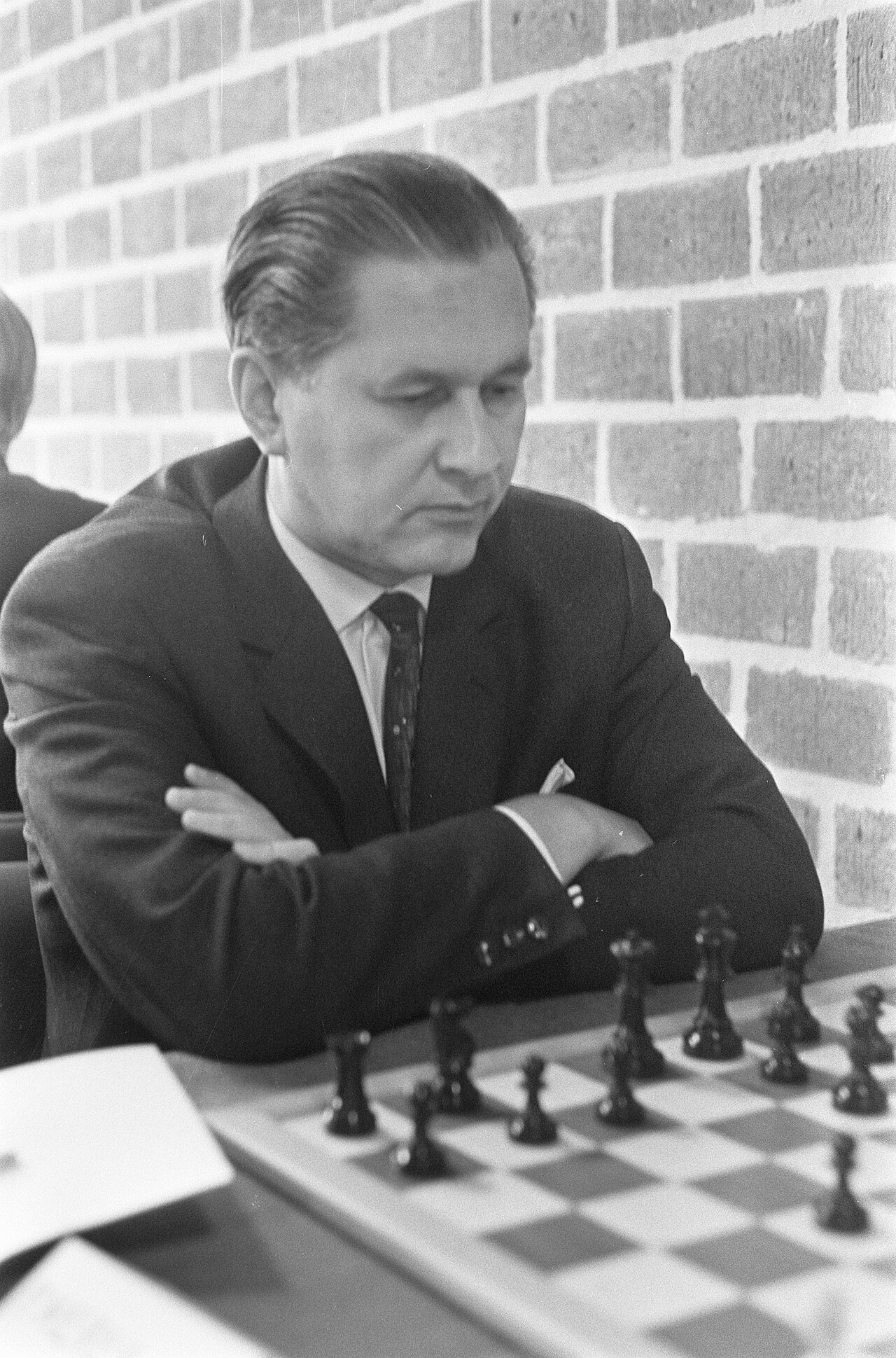
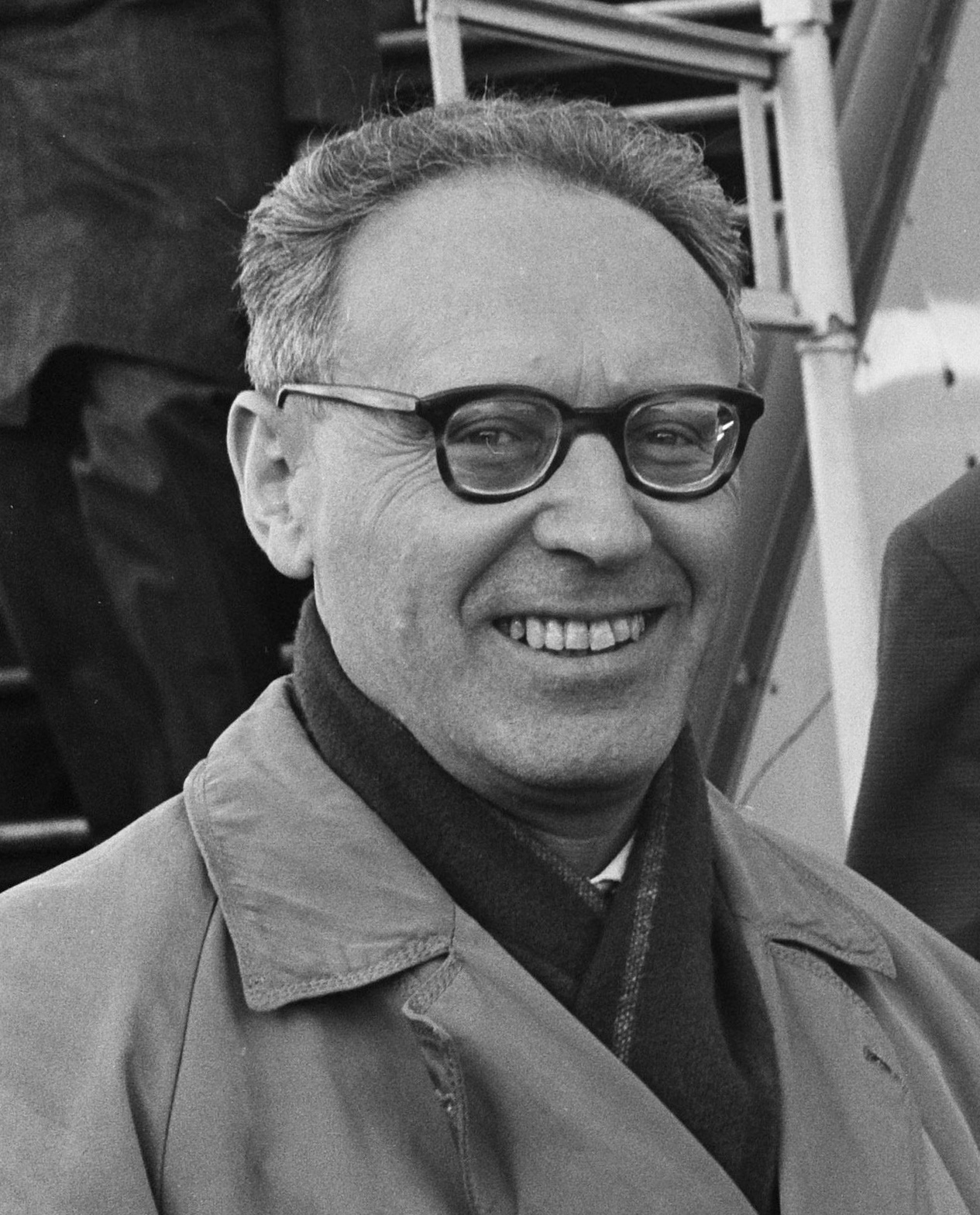
Grand Hotel Toplice on Lake Bled, photographed in 2013. Fischer stayed here in 1959.DimiTalen · CC0 · proportionally resized for the web · Hotel history · Image sourcePaul Keres at the Hoogovens tournament, 14 January 1969.Eric Koch for Anefo · CC0 · proportionally resized for the web · Image sourceMikhail Botvinnik at Schiphol Airport, 29 October 1962.Harry Pot for Anefo · CC BY-SA 3.0 nl · original file unchanged · Image sourceMark Taimanov (left) against Pal Benko in Beverwijk, 19 January 1970.Eric Koch for Anefo · CC0 · proportionally resized for the web · Image sourcePalma's historic architecture: the interior of the Lonja, photographed in September 2017.Malopez 21 · CC BY-SA 4.0 · proportionally resized for the web · Image sourceBobby Fischer in Belgrade. The date of this photograph is not established.Stevan Kragujević · CC BY-SA 3.0 rs · proportionally resized for the web · Image source
04
Interviews & archive film
See and hear Fischer—in context.
This curated selection links only to broadcasters, rights holders or institutional archives. BobbyChess does not load an external player without consent: a provider opens in a new tab only after a click. Availability, advertising, language and regional restrictions may vary. Historical statements reflect Fischer and their period—not the position of BobbyChess.
The narrative combines tournament records, contemporary reporting, institutional archives and explicitly attributed recollections. Conflicting dates or accounts remain visible as uncertainties. No retrospective psychiatric diagnoses are offered and no undocumented conversations are invented.
Historical photographs are separate from the AI-generated playing-profile avatars. Images carry specific CC0, CC BY or CC BY-SA permissions, alongside the identified public-domain documents. Modern location views carry their capture year. Source and licence links accompany every image; a free licence does not imply endorsement of BobbyChess by the people depicted.
No sufficiently established photograph licence was found for Regina or Joan Fischer in this selection. Freely viewable press photographs are therefore not simply copied. The same applies to images whose public-domain status is established only for the United States.